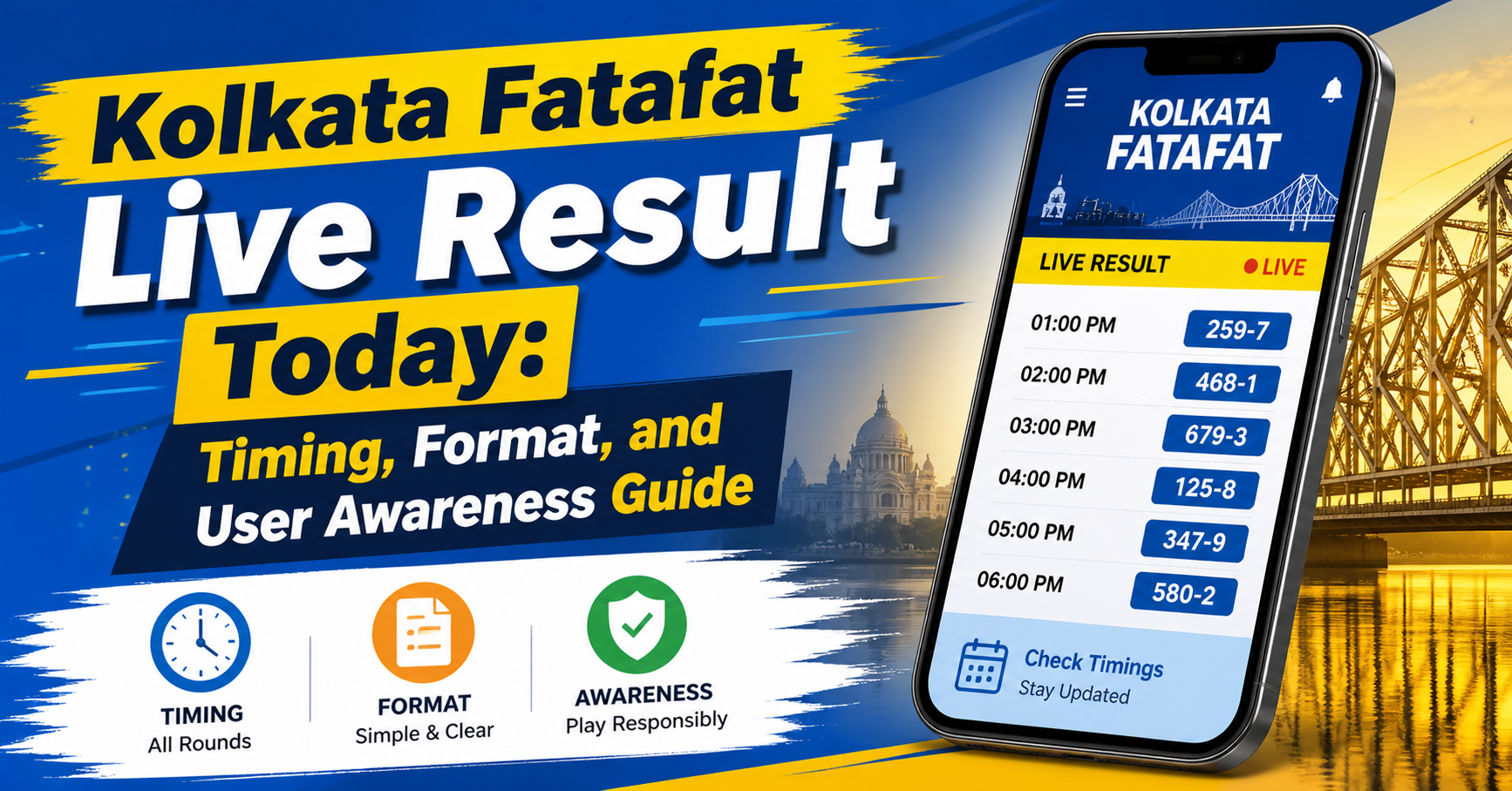
If you’ve searched for the kolkata lottery live result recently, you’ve probably noticed how frequently Kolkata Fatafat comes up. It’s one of those formats that people check multiple times a day—not just out of curiosity, but because it has quietly become part of a daily routine for many users across India.
But beyond the regular updates and fast-paced result cycles, there’s a structure behind it. Understanding how Kolkata Fatafat works—its timing, format, and overall system—can help you follow it more clearly and responsibly.
How Kolkata Fatafat Works
At its core, Kolkata Fatafat is a time-based result system that releases outcomes at scheduled intervals throughout the day. Unlike traditional once-a-day formats, this one operates on multiple rounds.
Here’s a simplified breakdown:
- Results are announced several times daily
- Each round produces a short numeric output
- Users track updates based on specific time slots
Because of this frequency, many users don’t just check once—they follow updates across different rounds. This is where the “live result” aspect comes in.
However, it’s important to approach this system with an informational mindset. Results are structured and time-based, not predictive. There’s no guaranteed pattern or shortcut involved.
Understanding the Daily Timing
Timing plays a huge role in how Kolkata Fatafat is followed.
While schedules can vary slightly depending on the source, results are typically released in multiple rounds from afternoon to evening. Each round has a fixed time, and users often align their checks accordingly.
A general idea of the timing flow:
- Early rounds begin in the afternoon
- Mid-day rounds follow at regular intervals
- Final rounds are usually released in the evening
Because updates happen frequently, it’s easy to miss a result if you’re not aware of the schedule. That’s why many users rely on consistent tracking habits or platforms that organize results clearly.
Result Format Explained
One of the reasons Kolkata Fatafat remains popular is its simple format.
- Results are usually short numeric outputs
- Each round produces a distinct number
- No long combinations or complicated structures
This simplicity makes it easy for users to follow, even if they’re new. You don’t need to interpret complex charts or systems—just check the number released for each round.
Still, simplicity doesn’t mean predictability. It’s important not to assume patterns where none exist.
Where Users Check Results Today
With the shift toward digital access, most people now check results online rather than relying on offline updates.
Mobile-friendly websites, quick-loading pages, and structured listings have made it easier to stay updated throughout the day.
For example, some users prefer to review fatafat khela result today details on platforms that organize results by time and round. Having everything in one place reduces confusion and helps avoid missing updates.
That said, not all sources are equally reliable. It’s always better to stick with platforms that are consistent and clearly structured.
Platform Features and Access
Modern result platforms typically focus on simplicity and accessibility.
Common features include:
- Time-based result listings
- Mobile-optimized layouts
- Quick navigation between rounds
- Minimal loading times
Most users access these platforms via smartphones, which is why lightweight design matters. A clean interface makes it easier to check results quickly without unnecessary distractions.
Some platforms also include historical data, allowing users to view past results. While this can be useful for reference, it’s best treated as information—not a predictive tool.
Safety and Legality in India
This is where things require a bit more awareness.
In India, lottery and gaming-related activities are regulated at the state level. That means:
- Some states allow certain formats
- Others have stricter rules or restrictions
- Online access doesn’t always reflect local legality
Kolkata Fatafat operates within a broader system that can fall into legal grey areas depending on how it’s accessed or interpreted.
A few key reminders:
- Always check local regulations in your state
- Avoid making assumptions based on online availability
- Be cautious about platforms that make unrealistic claims
India has been gradually promoting responsible digital behavior, especially in areas involving gaming and online platforms. Staying informed is part of that responsibility.
Tips for Users and Best Practices
If you’re someone who checks Kolkata Fatafat results regularly, a few practical habits can help keep things balanced and informed.
1. Follow a Fixed Schedule
Instead of checking randomly throughout the day, align your checks with known result timings. This reduces unnecessary screen time.
2. Use Trusted Platforms
Stick to websites that present results clearly and consistently. Avoid switching between too many sources.
3. Don’t Rely on Patterns
It’s common to see discussions about “trends” or “predictions,” but these are not reliable. Focus on the actual results instead.
4. Stay Within Limits
If checking results becomes a frequent habit, take a step back and set boundaries. Awareness matters more than constant tracking.
5. Keep It Informational
Approach the system as a source of updates, not expectations. This mindset helps avoid unnecessary assumptions.
Many experienced users treat Kolkata Fatafat as a routine check—similar to reading daily updates—rather than something to rely on heavily.
The Role of Routine in Daily Tracking
One interesting aspect of Kolkata Fatafat is how it naturally fits into daily routines.
Because results are released multiple times a day, users often:
- Check during breaks
- Follow updates alongside other daily tasks
- Build a habit around specific time slots
This routine-based interaction is what keeps the system relevant. It’s less about urgency and more about consistency.
Still, it’s important to keep that routine balanced. Digital habits, even simple ones, can add up over time.
Conclusion
Kolkata Fatafat live results have become a familiar part of daily digital activity for many users in India. With its frequent updates, simple format, and easy access, it’s understandable why people check it regularly.
But beyond the routine, understanding the system—its timing, structure, and broader context—makes a real difference. Whether you’re new to it or have been following it for a while, staying informed and responsible should always come first.
At the end of the day, clarity beats assumptions. And when it comes to systems like this, a steady, informed approach is always the better choice.